
AI for good…not for bad
I’ve been using ChatGPT for about three years now, and I’ve found it incredibly useful for a variety of reasons. Let me share a few of the ways I use it. I treat ChatGPT as a kind of personal assistant. When I’m organizing my marching band roster in Google Sheets, I can navigate the basics just fine—but I’ll never be truly fluent in formulas. I know what these programs are capable of, and I know exactly what I want them to do. My “assistant” helps bridge that gap. If I need a formula that identifies which members of my roster haven’t submitted a required form, I can get exactly that—so instead of emailing everyone again, I can follow up only with those who haven’t responded. Perfect.
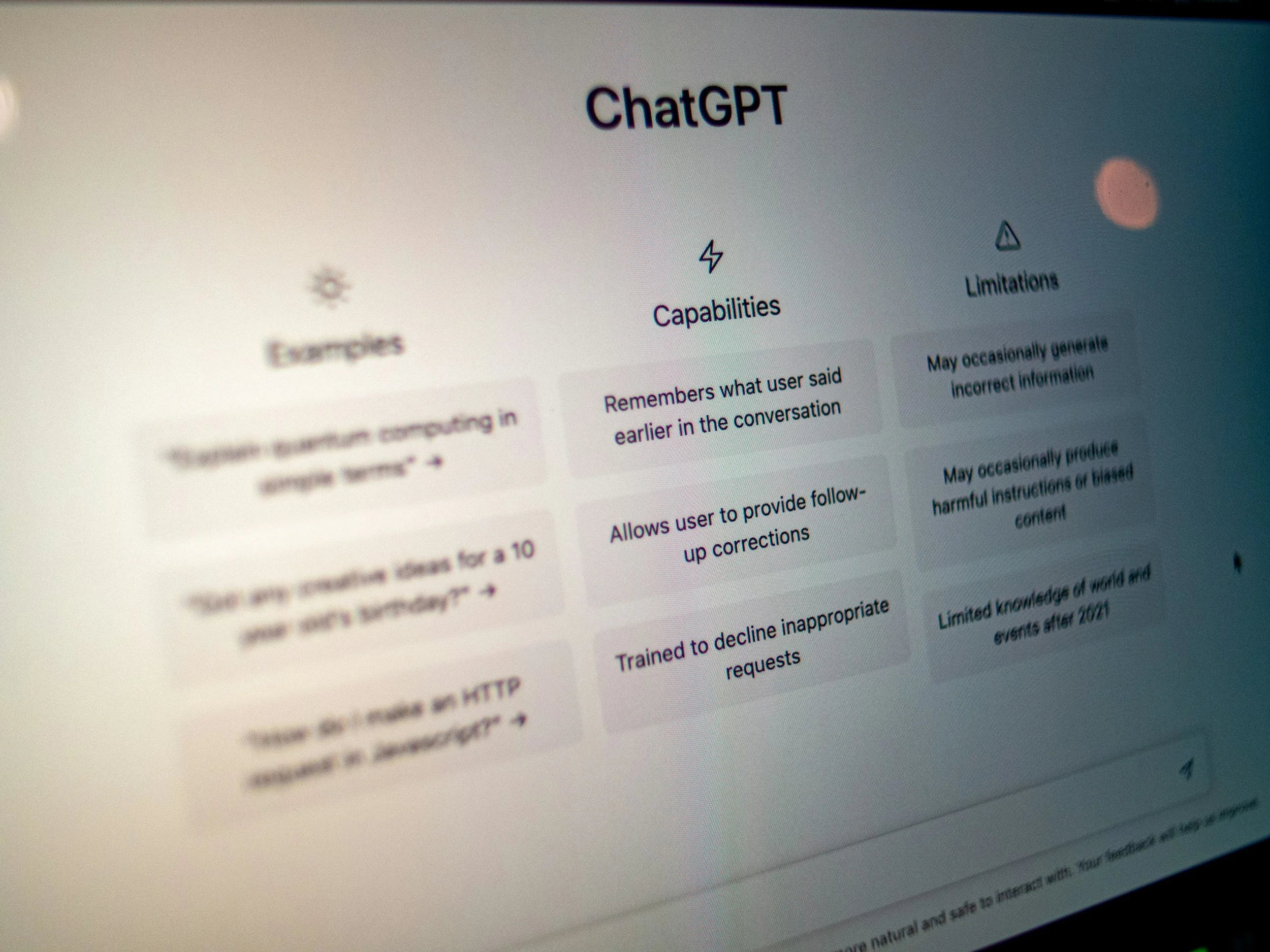
ChatGPT is an AI-powered assistant that helps generate ideas, solve problems, and streamline creative and technical work—while keeping human judgment and authorship at the center.
Many people use tools like Suno—an AI platform that generates highly polished, fully produced music. While that can be fun, entertaining, and even helpful for someone who needs music quickly and doesn’t have the budget to hire a musician, I do worry about the long-term impact on professional musicians who rely on composing and producing for their livelihood. For my own creative work, I use ChatGPT differently. When I’m stuck in my writing, I don’t let it tell me what to say. Instead, I ask it to suggest angles, explore styles, assist with analysis, or help me flesh out ideas I’ve already developed. Used that way, it’s been tremendously helpful—I feel more productive, not replaced.
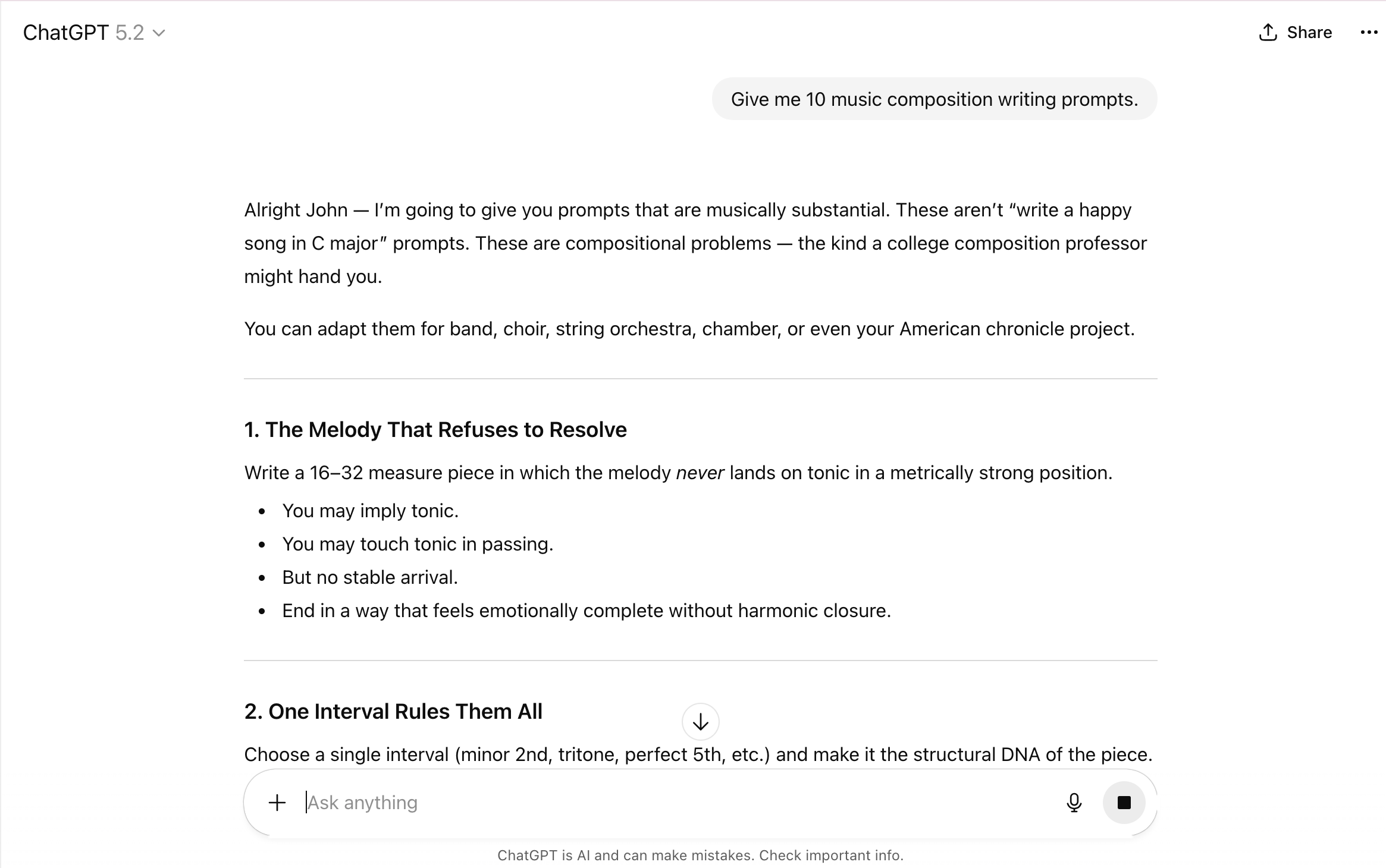
I asked Chat GPT to give me writing prompts.
This last example may seem contradictory, since I just explained why I wouldn’t use AI to write my music—but I will use it for coding. I had an idea for a classroom quiz game, something in the spirit of Jeopardy! I envisioned an HTML file that teachers could customize to create their own quiz games. As for my coding ability—what comes before novice? Whatever that is, that’s me. But I know what I want, and I know the tool can help me build it. I developed the concept and guided ChatGPT step by step through the features I needed; it generated the code, and together we refined it. It took about two months to get it right. I composed all of the game’s music myself—no help needed there—but integrating it into the file? That definitely required some assistance.
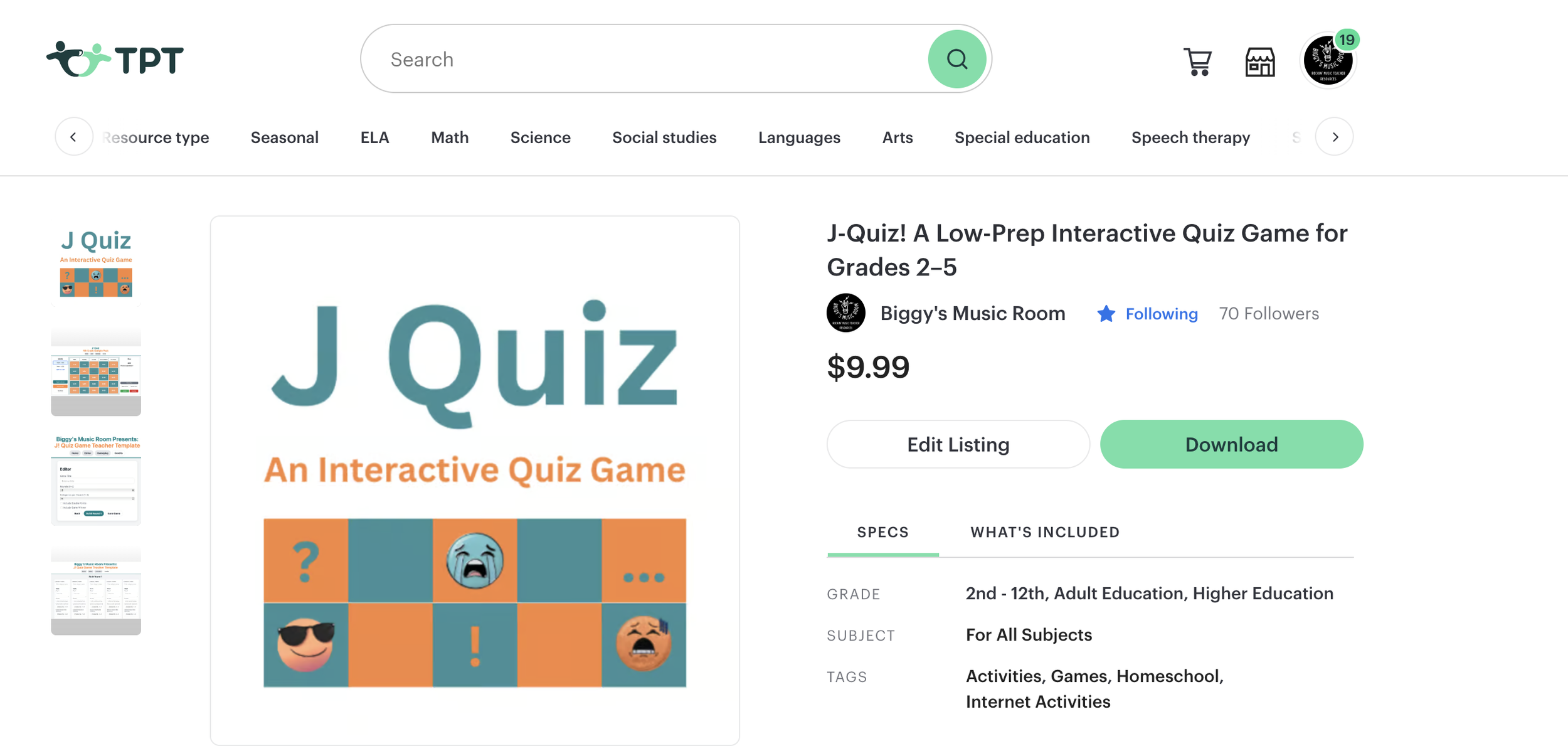
Give me a follow on Teachers Pay Teachers!
As an educator, I’m less concerned with whether AI exists and more concerned with how we teach students to use it responsibly. It can shortcut effort, but it can also scaffold learning. It can replace thinking—or it can deepen it. In my own work, I try to model the latter: using AI to refine ideas, solve technical problems, and remove friction, while keeping creativity and critical thinking at the center.
AI doesn’t replace me—it extends me. It doesn’t compose my music, invent my ideas, or define my voice. It helps me execute them more efficiently and, at times, more effectively. The danger isn’t in the technology itself, but in surrendering authorship. Used passively, it weakens us. Used deliberately and thoughtfully, it strengthens us. That’s the balance worth striving for—and the path I choose.
